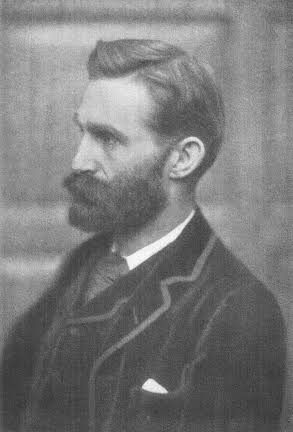
 Frank Podmore (February 5, 1856 – August 14, 1910) was a prominent British author, psychical researcher, and a co-founder of the Fabian Society.
Queer Places:
University of Oxford, Oxford, Oxfordshire OX1 3PA
Malvern Wells Cemetery, Malvern WR14 4JE, United Kingdom
Frank Podmore (February 5, 1856 – August 14, 1910) was a prominent British author, psychical researcher, and a co-founder of the Fabian Society.
Born in Tunbridge Wells, he was educated at Radley College and Pembroke College, Oxford. Professionally, he worked as a civil servant in the London General Post Office from 1879 until 1907.
Podmore is best remembered for his critical and skeptical contributions to the Society for Psychical Research (SPR), which he helped establish in 1882 alongside figures like Edmund Gurney and Frederic W.H. Myers. Although he firmly believed in the possibility of thought-transference (telepathy), Podmore dedicated much of his career to exposing fraudulent mediums, spiritualist phenomena, and trickery, earning a reputation as a rigorous and skeptical investigator. His major written works include Phantasms of the Living (co-authored with Gurney and Myers in 1886), Modern Spiritualism (1902), and The Newer Spiritualism (1910).
In his later years, Podmore's life underwent significant upheaval. In 1907, he left his position at the Post Office—compelled to resign following allegations regarding homosexual involvements—and permanently separated from his wife. He died under mysterious circumstances in August 1910, when he went missing during a walk in Malvern and was found dead in a pool near the Malvern Golf Links.
Dr. Arthur Thomas Myers was a physician, a prominent member of the SPR, and the brother of Frederic W.H. Myers. He was part of a tight-knit and historically notable inner circle within early psychical research that included Podmore, Edmund Gurney, and Frederic Myers.
Arthur Thomas Myers, alongside Edmund Gurney and Frank Podmore, belonged to an intellectual Cambridge-educated elite operating in late-Victorian England. Biographical research and historical analyses of the SPR often touch upon the homosocial—and at times homoerotic—networks embedded within these circles.
Frank Podmore’s connection to the broader history of nineteenth-century sexuality became more explicit later in his life, when biographical evidence and contemporary records indicated he was compelled to leave his government post due to allegations of same-sex involvements, reflecting the precarious realities faced by men attracted to men under Victorian criminal laws (such as the Labouchere Amendment).
References:
Support this project
This website is a passion project researched, developed, and funded entirely by me. If you find the content valuable and would like to help support the ongoing research and hosting costs, any contribution is deeply appreciated.
Thank you for keeping this independent resource alive!
My books on Amazon: Elisa Rolle's books